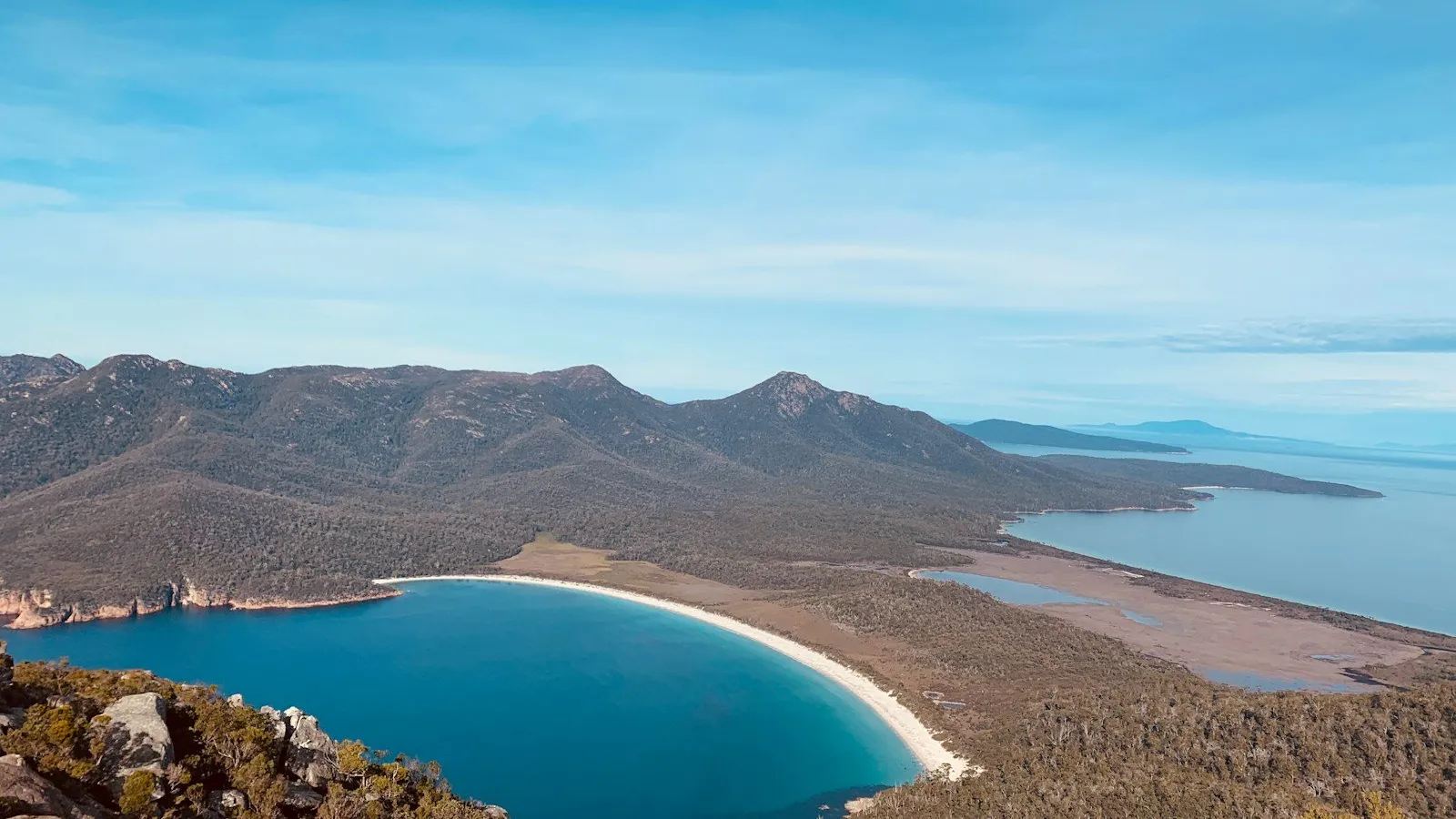
Tasmania’s east coast runs 220 kilometres from Orford to the Bay of Fires. Most of it is empty: white sand, granite headlands, cool-climate vineyards, and the jagged pink granite of the Hazards range rising straight out of the Tasman Sea.
It is also Tasmania’s driest coast, warmer and more reliable than Hobart or the wild west. The water is the state’s warmest (relatively speaking). The light, particularly in the late afternoon when it catches the pink granite, is extraordinary.
What makes the east coast work as a luxury trip is the concentration. Wineglass Bay, a working oyster farm, a growing cool-climate wine trail, and some of Australia’s best coastal walking are all within 30 minutes of each other around Freycinet. You can walk to one of the world’s great beaches in the morning, shuck oysters at lunch, visit a cellar door in the afternoon, and eat a degustation dinner without driving more than 20 minutes between any of them.
The Great Eastern Drive
The backbone of the trip is the Great Eastern Drive, the 220km coastal route from Orford to St Helens. It connects every major stop, and the drive itself is half the experience: ocean views, empty beaches, and the Hazards appearing and disappearing as the road curves.
The key stops, heading north from Hobart:
Orford and Triabunna. The gateway towns. Triabunna is where the ferry leaves for Maria Island. Not much reason to linger otherwise, though the fish and chips at the Triabunna waterfront are good.
Swansea. The largest town on the east coast (which is not saying much). It sits on Great Oyster Bay with views across to the Hazards, and it is the most practical base for the southern half of the coast. The wine trail starts here.
Coles Bay and Freycinet. The centrepiece. Freycinet National Park occupies the entire peninsula, with Wineglass Bay on one side and Great Oyster Bay on the other. Coles Bay is the small township at the entrance, where most of the accommodation clusters.
Bicheno. A quieter fishing town 30 minutes north of Coles Bay. Known for its penguin colony (nightly tours at dusk) and a blowhole. Good for a half-day stop.
Bay of Fires and Binalong Bay. The northern end of the east coast, about 1.5 hours from Coles Bay. White sand, turquoise water, and the bright orange lichen-covered boulders that give the place its name. Binalong Bay is the gateway settlement.
What to See and Do
Wineglass Bay
The walk to the lookout is about 90 minutes return from the car park at Freycinet National Park. The view from the top, a perfect crescent of white sand between two granite ridges, is genuinely one of the best in Australia.
The full descent to the beach adds another hour each way. It is steep on the return, so bring water and allow the time. Go early in the morning to avoid the day-trip crowds from Hobart, who tend to arrive mid-morning.
For a longer day, the Wineglass Bay and Hazards Beach circuit (4 to 5 hours) loops over the isthmus and back along the coast. It is the best way to experience the full peninsula without committing to a multi-day walk.
Freycinet Marine Farm
A working oyster farm on the edge of Great Oyster Bay. The full guided experience ($170 per person) includes a tour of the farm, a hands-on shucking lesson, and a tasting of freshly harvested oysters paired with wines from Freycinet Vineyard.
It is one of those experiences that works because of where it happens. The oysters are pulled from the water you are looking at. The vineyard is on the hill behind you. The Hazards are across the bay. Half a day here is one of the best half-days on the coast.
The Wine Trail
The east coast wine scene is small and young, but the cool climate produces sharp, elegant wines that punch above their weight. Pinot noir, chardonnay, and riesling dominate.
Devils Corner is the headline act: Tasmania’s largest vineyard at nearly 200 hectares, with a cellar door open daily, a lookout platform over the vines, and food partners Tombolo Freycinet and Fishers of Freycinet on-site. It is well set up for a lazy afternoon.
Freycinet Vineyard is smaller and more intimate, with tastings by appointment. Milton Vineyard and Spring Vale round out the trail, both within 20 minutes of Swansea. Spring Vale’s riesling, in particular, has a quiet reputation among Tasmanian wine people.
Bay of Fires
An hour north of Coles Bay, past Bicheno. The beach runs for roughly 50 kilometres, and on most days you will have long stretches of it entirely to yourself. The water is a shade of turquoise that looks edited in photographs and is not.
Binalong Bay, at the southern end, has a general store and a couple of cafes. The swimming is excellent if you can handle water around 17 degrees. The northern reaches, accessible by a short drive or a longer walk, are the emptiest and most striking.
Maria Island
A car-free national park reached by ferry from Triabunna (40 minutes south of Swansea). No shops, no cars, no phone reception on much of the island. What it does have: convict-era ruins at Darlington, the extraordinary banded sandstone of the Painted Cliffs, and more wombats per square metre than anywhere else in Tasmania.
It is a full-day commitment. The first ferry leaves Triabunna around 9am, the last returns around 4:30pm. Bring lunch, walking shoes, and expect to cover 10 to 15 kilometres on foot. The Fossil Cliffs and Bishop and Clerk summit walk are both worth the effort.
Bicheno Penguin Tours
The little penguin colony at Bicheno is one of the most accessible wildlife experiences on the coast. Guided tours run at dusk nightly. It is low-key, genuine, and over in about an hour. Book ahead in peak season.
Luxury Walking Experiences
The east coast is also home to three of Australia’s best guided multi-day walks. These are luxury experiences in their own right, with private lodges, chef-prepared meals, and Tasmanian wines included.
The Freycinet Experience Walk is a four-day, three-night guided walk covering the full Freycinet Peninsula. Maximum ten guests. Nights are spent at Friendly Beaches Lodge, a private lodge on a 130-hectare coastal sanctuary. All meals, transfers from Hobart, and national park passes are included.
The Bay of Fires Signature Walk runs three days along the remote northeast coast (October to May). The accommodation is Bay of Fires Lodge, an architecturally designed timber-and-glass pavilion perched 40 metres above the beach. Spa treatments, gourmet meals with local wines, and kayaking on Ansons River are all part of the package.
The Maria Island Walk takes four days across the island, staying in wilderness camps and the heritage-listed Bernacchi House (built 1880). Candlelit dinners, Tasmanian wines, and a maximum of ten walkers. October to April only.
These walks book out months in advance, particularly for summer departures. Plan early.
The east coast’s appeal is the proximity: oysters from the bay, wine from the vineyard next door, a walk to one of the world’s great beaches, all before dinner. No other stretch of Australian coast packs this much into 220 kilometres.
Where to Stay
The east coast has more accommodation options than its quiet reputation suggests, from Australia’s most awarded luxury lodge to architect-designed self-contained retreats and comfortable mid-range bases.
The Luxury Lodges
Saffire Freycinet is the anchor. Twenty suites on a private coastal reserve overlooking Great Oyster Bay, with the Hazards filling every window. The all-inclusive rate covers three meals daily at Palate (run by executive chef Paddy Prenter), house wines and spirits, a stocked minibar, and signature experiences including the oyster farm, beekeeping, guided walks, and Tasmanian devil encounters. Two Michelin Keys (2025). Rates from roughly $2,300 per night (cool season) to $2,700 (peak summer). The Luxury Suite is the sweet spot for value.
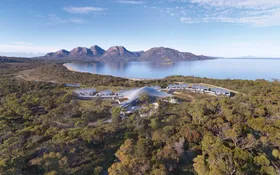
Saffire Freycinet
East Coast, TASTasmania's wild coast, distilled into twenty suites
View hotelInside the National Park
Freycinet Lodge is the only accommodation within Freycinet National Park, set among eucalypt forest with the Hazards above and the Wineglass Bay trailhead five minutes away. Room quality varies widely. The Coastal Pavilions (king beds, outdoor bathtubs, bay views) are the pick; the basic one-room cabins are dated. From roughly $235 to $450 per night, room only. The value is the location, not the finish.
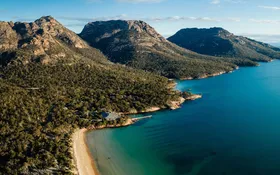
Freycinet Lodge
East Coast, TASWhere the national park is the resort
View hotelSelf-Contained and Boutique
Piermont Retreat in Swansea occupies a stretch of beachfront on Great Oyster Bay. Rammed-earth cottages and stone suites with log fires, kitchens, and a private beach. The self-contained model suits longer stays and people who want to set their own pace. From around $214 per night (off-peak cottage) to $1,300 (three-bedroom residence). The Premium Spa Cottages ($450 to $780) are the sweet spot for couples.
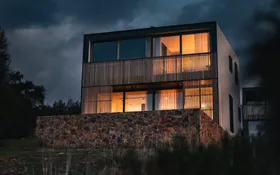
Piermont Retreat
East Coast, TASA beachfront village where the east coast slows down
View hotelEdge of the Bay in Coles Bay has 14 ocean-view studios and six self-catering chalets on 27 acres of waterfront bushland, directly facing the Hazards. Complimentary kayaks, SUPs, and bikes. From around $250 per night with breakfast included. A solid mid-luxury option with one of the best outlooks on the coast.
Sea Stacks near Bicheno is for design lovers. Three architecturally designed houses (Feldspar, Mica, Quartz) on Denison Beach, each sleeping two. Wood fires, luxury bathtubs, floor-to-ceiling windows, Aesop products, and breakfast provisions included. Couples only. Around $400 per night.
Thalia Haven is a different proposition entirely: four stone cottages on a private 130-acre peninsula overlooking Great Oyster Bay. Off-grid (solar, rainwater), with stone fireplaces and a stocked pantry. It accommodates up to ten guests and works best as a private group booking. About an hour from Hobart airport.
Avalon Coastal Retreat near Swansea is a single architect-designed house (by Craig Rosevear) on a headland overlooking Great Oyster Bay towards Maria Island. Three bedrooms, pre-stocked with gourmet meals, Tasmanian wine, and single malt whisky. Michelin Guide listed. From $1,050 per night (minimum two nights).
One to Watch: Wineglass Bay Estate
A new property opening in June 2026. Eight architecturally designed standalone retreats on 52 acres at Moulting Lagoon, between Freycinet National Park and Coles Bay. Interiors by Oliver Myles. The most interesting detail is Kitty’s Mistake Vineyard, planted on the grounds, with a cellar door opening July 2026.
For the Ultra-Committed
Picnic Island sits 800 metres offshore from Coles Bay. Three king bedrooms for a maximum of six guests. A private chef, dedicated host, premium Tasmanian wines, and your own skipper are all included. The island is capped at 100 guest nights per year to protect its resident little penguin colony. From $10,000 per night for exclusive use, three-night minimum. It is exactly as indulgent as it sounds.
When to Go and How to Plan
Summer (December to February) brings the warmest weather, 20 to 24 degrees, and the longest days. Peak season, peak pricing, and the most company on the trails.
Autumn (March to April) is the sweet spot. Fewer visitors, harvest season at the vineyards, water temperatures at their warmest (the Tasman Sea lags a month behind the air), and comfortable hiking weather. Saffire’s rates begin to ease.
Winter (May to September) is for those who like the quiet. Saffire drops to its Cool Season rate (from $2,300 per night). The Southern Lights are occasionally visible. The east coast stays drier than the rest of the state, though expect cool days around 10 to 14 degrees.
Spring (October to November) sees wildflowers, migrating whales, and the return of the guided walking seasons. Shoulder pricing at most properties.
Drive Times from Hobart
| From | To | Time |
|---|---|---|
| Hobart | Swansea (Piermont) | 2 hours |
| Swansea | Coles Bay (Saffire, Freycinet Lodge) | 30 minutes |
| Coles Bay | Bicheno (Sea Stacks) | 30 minutes |
| Bicheno | Bay of Fires (Binalong Bay) | 1.5 hours |
| Hobart | Bay of Fires (direct) | 4 hours |
How Many Nights?
Three nights is the minimum for a satisfying trip: enough for Wineglass Bay, an oyster farm visit, and a cellar-door afternoon. Five to seven nights is ideal if you want to include the Bay of Fires, Maria Island, and a day with no plan at all.
A workable split: two to three nights around Coles Bay (for the national park, oyster farm, and Wineglass Bay), then one to two nights at Swansea (for the wine trail and Maria Island), with a day trip north to the Bay of Fires.
Common Questions
How far is Freycinet from Hobart?
About 2.5 hours by car (195km via the Tasman Highway through Orford and Swansea). The drive is scenic and straightforward. There is no public transport to Coles Bay, so a rental car is essential.
What is included at Saffire Freycinet?
The nightly rate covers all meals at Palate restaurant, house wines and spirits, a stocked minibar, and signature guided experiences including oyster farm visits, beekeeping, Wineglass Bay walks, and Tasmanian devil encounters. Spa treatments are the main extra.
What is the best time to visit Tasmania's east coast?
March and April offer the best balance: warm enough for hiking and swimming, fewer crowds than summer, harvest season at the vineyards, and lower accommodation rates. The east coast is Tasmania's driest region year-round.
How many nights do you need on the east coast?
Three nights is the minimum for a satisfying trip. Five to seven nights lets you comfortably include Wineglass Bay, the Bay of Fires, Maria Island, the wine trail, and unhurried time at your accommodation.
Are there alternatives to Saffire on the east coast?
Freycinet Lodge offers mid-range accommodation inside the national park (from ~$235/night). Piermont Retreat in Swansea has self-contained cottages from ~$214/night). Sea Stacks near Bicheno has architect-designed houses from ~$400/night. Wineglass Bay Estate opens June 2026.
Can you do the east coast as a road trip?
Yes, and it is the best way to see it. The Great Eastern Drive runs 220km from Orford to St Helens, connecting every major stop. A car is essential as there is no public transport along the coast.
The East Coast in a Sentence
There are longer drives in Australia, and more remote ones. There is nowhere else where this concentration of good food, good walking, and good places to stay is packed into such a compact, accessible stretch of coast. Two and a half hours from Hobart, and a different world entirely.