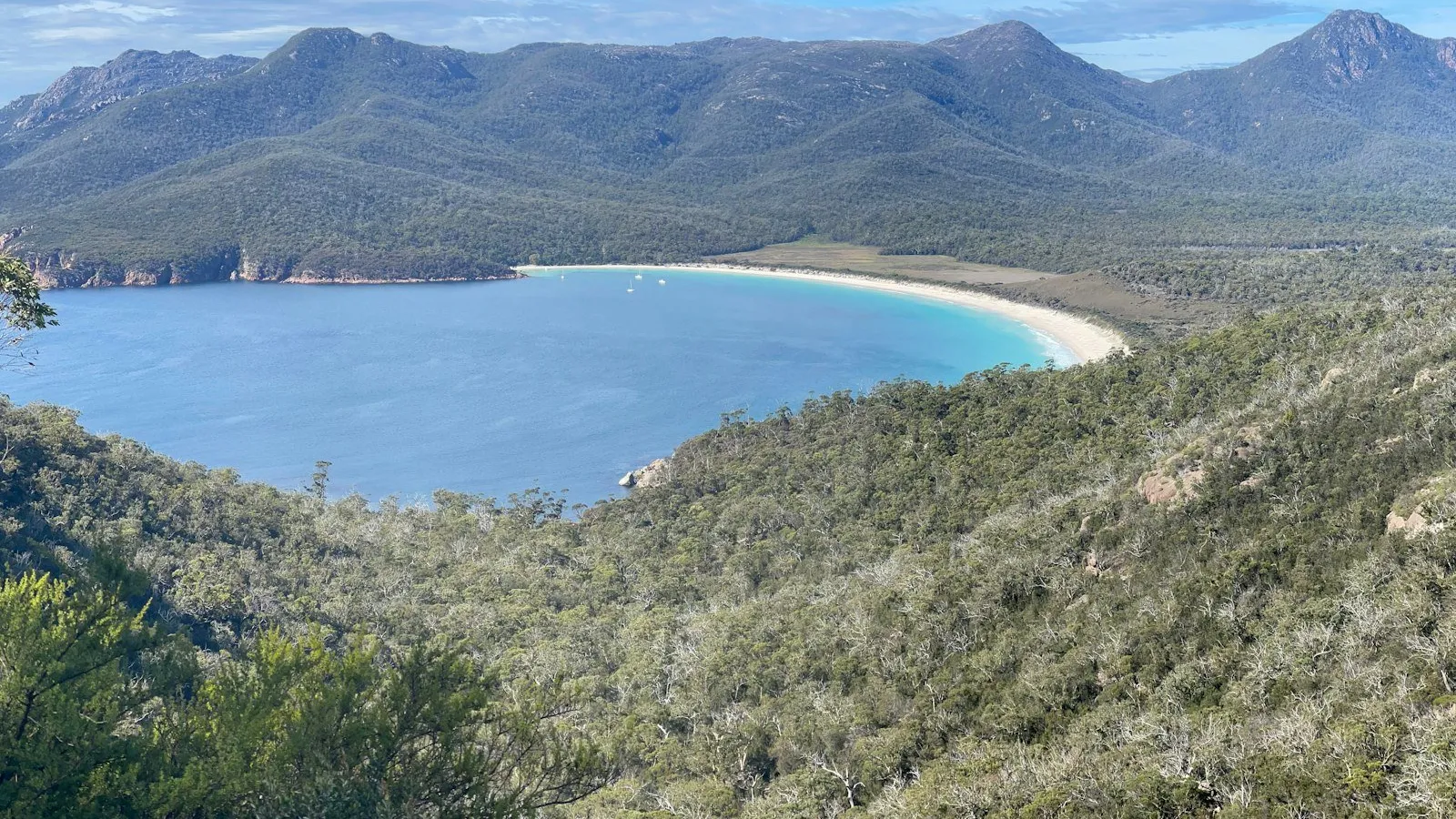
Saffire Freycinet charges $3,300 a night. That number alone is enough to make most travellers scroll past. Meanwhile, qualia on Hamilton Island starts at $1,820 for a Leeward Pavilion, and suddenly feels like the sensible choice.
Except it isn’t. Not once you start eating.
The gap between Australia’s all-inclusive luxury lodges and their à la carte counterparts is one of the most misunderstood numbers in the industry. Headline rates tell you almost nothing about what a stay actually costs. And when the real maths is done, the properties that look most expensive on paper often turn out to be the shrewder spend.
The Sticker-Price Illusion
qualia’s Classic package covers your room, breakfast, non-alcoholic drinks, and a golf buggy. Everything else is extra. The Gourmet upgrade, which adds dinner for two, costs an additional $560 per night. Add a modest lunch ($80-120 per person), a couple of glasses of wine at Pebble Beach, and the true daily outlay climbs to somewhere between $2,640 and $2,820.
Saffire’s $3,300 rate, by comparison, includes every meal at Palate, selected wines and spirits, the minibar, guided experiences (the oyster farm, Wineglass Bay walks, kayaking, beekeeping), and a spa credit of $100 to $200 depending on suite category. The apparent $1,480 gap between the two properties shrinks to roughly $500 once the extras are accounted for. Factor in Saffire’s included activities and it narrows further still.
This pattern repeats across Australia’s all-inclusive tier. The sticker price is designed to shock. The true cost, once everything is tallied, rarely does.
What “All-Inclusive” Actually Means (and Doesn’t)
The term gets used loosely, and each property defines it differently. The details matter.
Bedarra Island Resort includes all meals, an open bar stocked with champagne and cocktails, a restocked minibar, and every on-island activity including your own motorised dinghy to explore neighbouring islands. For a private island with a maximum of sixteen guests, $1,890 a night starts to look like the sweet spot of Australia’s luxury landscape.
Bedarra Island Resort
Tropical North Queensland, QLDAustralia's most intimate island, where barefoot luxury meets the Great Barrier Reef
View hotelSouthern Ocean Lodge, rebuilt at a cost of $55 million after the 2019/20 bushfires, covers three daily meals, an open bar with premium South Australian wines, guided wildlife excursions to Seal Bay and Remarkable Rocks, and return airport transfers from Kingscote. The walk-in cellar and four-course dinners alone would cost hundreds per night at a non-inclusive property.
Berkeley River Lodge takes the concept furthest. The 5-night package ($9,875 per person) includes charter flights from Darwin, all meals and premium beverages, daily guided adventures, a signature spa treatment, and a welcome gift. There is, quite literally, nothing left to pay for once you board the plane. Worth noting: the lodge operates only from May to August, with just 400 packages available for the entire season.
All four properties share a few common exclusions: ultra-premium cellar selections, helicopter tours (a significant additional cost at Berkeley River), and outer reef excursions at Bedarra. These are genuine extras, not stealth charges.
The Psychology of Not Counting
The strongest argument for all-inclusive luxury has nothing to do with arithmetic. It’s about what happens to the quality of a holiday when the meter stops running.
At a non-inclusive property, every experience comes with a small mental calculation. The spa menu arrives and the price column draws the eye before the treatment list does. The sommelier recommends a bottle and the first instinct is to glance at the cost. These are tiny frictions, barely conscious, but they accumulate across a four or five-night stay.
Saffire and Southern Ocean Lodge eliminate that friction entirely. The answer to every question is yes. Yes to the second glass. Yes to the afternoon kayak. Yes to the spa. The result is a different texture of stay, one where generosity feels built into the architecture rather than negotiated at every turn.
This matters more than most travellers expect it to. The people who return to all-inclusive lodges year after year rarely cite the food or the views first. They talk about the feeling of not thinking about money for a week.
The Counter-Argument: Freedom and Choice
All-inclusive means one kitchen, one chef, one philosophy. At Saffire, Palate serves a daily-changing degustation. It’s excellent. It’s also the only option, every night, for the duration of the stay.
qualia, by contrast, runs two restaurants with distinct personalities: the relaxed, open-air Long Pavilion and the more polished Pebble Beach, which has earned Australian Good Food Guide recognition. Guests also have access to Hamilton Island’s wider dining scene. That variety carries real value for anyone staying longer than three nights.
qualia
Whitsundays, QLDA collection of deeper sensory experiences on the Great Barrier Reef
View hotel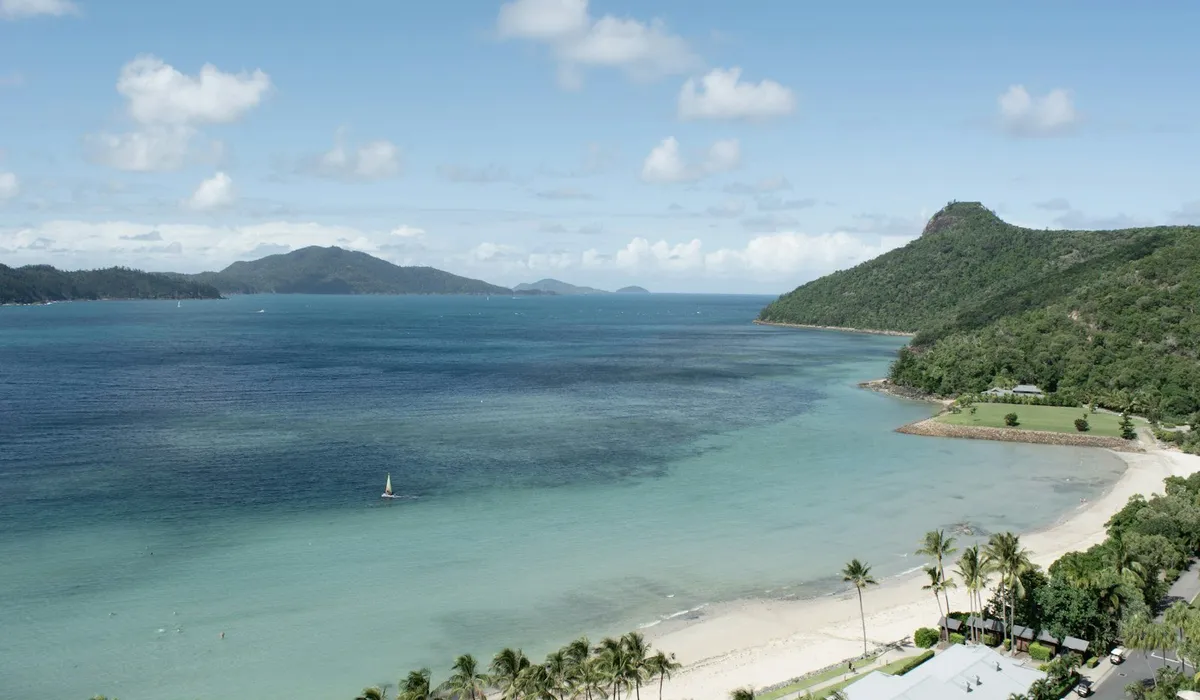
Capella Sydney makes the case even more plainly. The hotel sits in the middle of one of the world’s great restaurant cities. Brasserie 1930 holds two Chef’s Hats, the McRae Bar makes exceptional cocktails, and Aperture serves one of Sydney’s most coveted afternoon teas. All of that is available, and none of it is included in the room rate. The premium pays for proximity to choice, not for bundled generosity.
There’s also the question of pace. Berkeley River Lodge’s 5-night fixed itinerary is perfect for some travellers and claustrophobic for others. A 10-kilogram soft-bag luggage limit and no mobile reception are features if you want a complete reset, and dealbreakers if you don’t.
The all-inclusive model works best when the destination itself is the draw, when there’s nowhere else you’d rather be eating or exploring. In a city, it makes less sense.
The best all-inclusive hotels don’t just feed you and pour your drinks. They remove the one thing luxury travel is supposed to eliminate: the feeling that the meter is running.
Where the Model Is Heading
The Ritz-Carlton Lodge at Wolgan Valley, opening mid-2026, will be the world’s first property under Marriott’s new Lodge brand. It’s all-inclusive, set on a 7,000-acre conservancy in the Blue Mountains, and represents a $50 million bet by Emirates and Marriott that this pricing model is the future of Australian wilderness luxury. When global chains start building lodges instead of towers, the signal is clear.
Orpheus Island Lodge returns to the Great Barrier Reef in July 2026, also as an all-inclusive. Baillie Lodges, which operates both Southern Ocean Lodge (all-inclusive) and Capella Sydney (à la carte), continues to invest in both models, suggesting even the country’s most sophisticated hotel operator sees room for each approach depending on context.
The direction is unmistakable: remote, landscape-driven properties are moving toward all-inclusive, while city hotels stay à la carte. The logic is sound. In the Kimberley, there is no alternative restaurant down the road. On Hamilton Island, there are several.
The Bottom Line
The most expensive hotel on paper is rarely the most expensive hotel in practice. Bedarra Island at $1,890 a night, with everything included, costs less per day than many four-star city hotels once room service and a dinner reservation are added to the bill. Saffire at $3,300 delivers a comparable daily outlay to qualia once dining and activities are factored in, with the added comfort of knowing the total before you arrive.
Here’s the real question for anyone choosing between these properties. It is not whether all-inclusive is worth the money. The maths generally says yes. The question is whether the freedom to choose, to eat where and when and what you like, to set your own rhythm, justifies the premium that comes with it.
For most travellers at this level, in Australia’s remote wilderness lodges, it doesn’t. The all-inclusive model works because these places are the destination. The kitchen, the landscape, the pace of the day: they’re all part of a single, considered thing. Paying for it all upfront is just the honest way to price that.