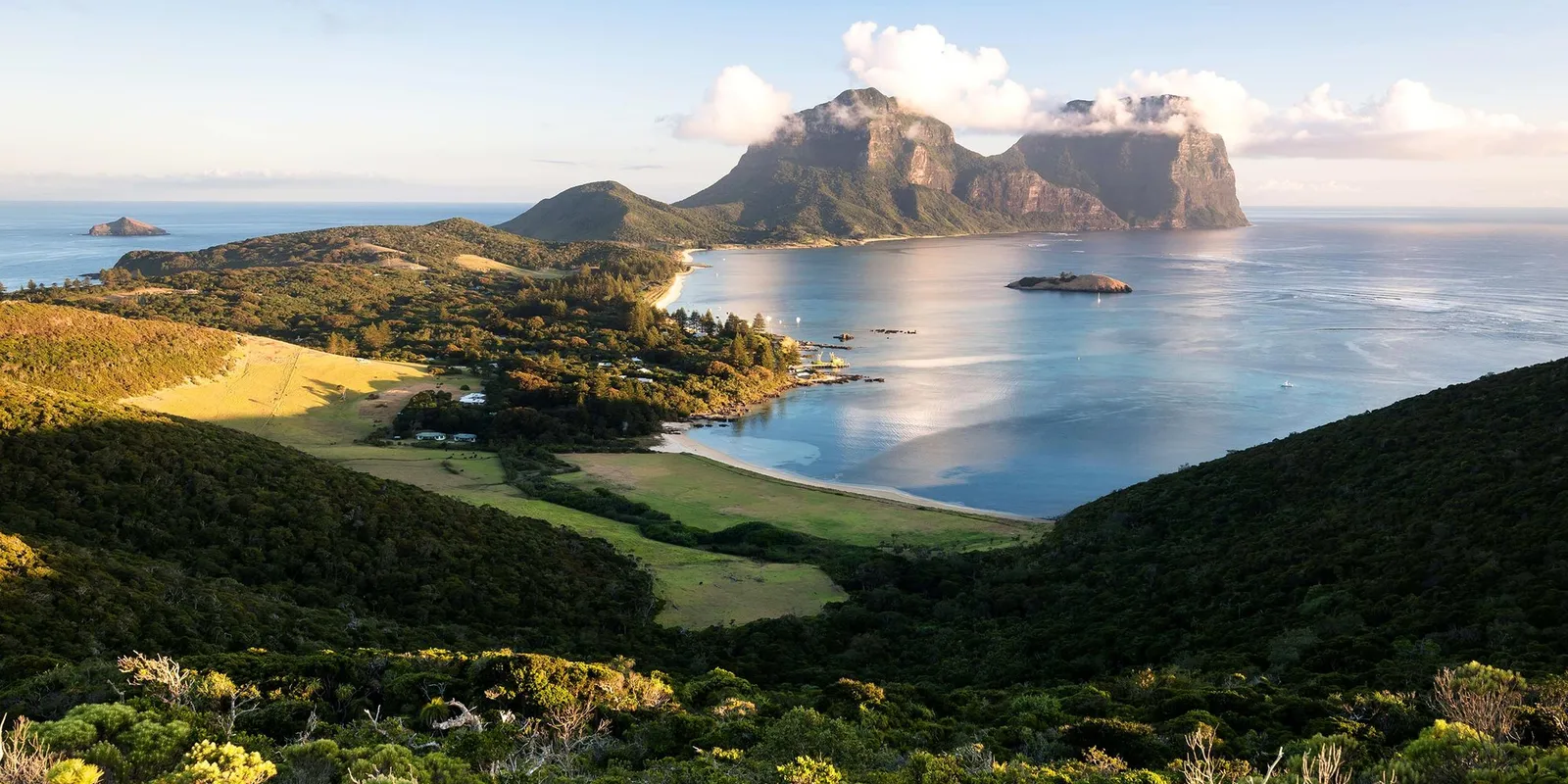
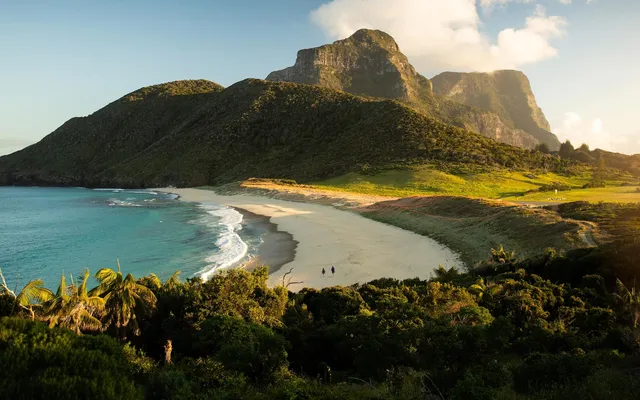
Lord Howe Island is, by any measure, one of the most beautiful and least visited places in Australia. A crescent-shaped volcanic remnant rising from the Tasman Sea 600 kilometres north-east of Sydney, it was granted UNESCO World Heritage status in 1982 for its outstanding natural beauty and the significance of its endemic species. The island’s most striking feature is the twin peaks of Mounts Gower and Lidgbird, which rise over 800 metres from the southern end and dominate every view. Between them and the northern hills lies a turquoise lagoon fringed by the world’s southernmost coral reef, where sea turtles glide over pristine coral and more than 500 species of fish have been recorded.
What makes Lord Howe extraordinary for travellers is its enforced exclusivity. Only 400 visitors are permitted on the island at any one time, a restriction that has been in place since the 1980s. There are no high-rise hotels, no chain restaurants, and, in most areas, no mobile phone reception. The speed limit is 25 km/h, the preferred transport is a bicycle, and the loudest sound most evenings is the call of the providence petrel returning to its burrow. It is a place that rewards slowing down to a pace that most people have forgotten exists.
The island’s natural offering is staggering for its size. The Mount Gower summit walk is regularly cited as one of Australia’s best day hikes, a guided climb through cloud forest to panoramic views of the entire island and the dramatic sea stack of Balls Pyramid 23 kilometres offshore. At sea level, the lagoon provides world-class snorkelling from the shore, Neds Beach offers the ritual of hand-feeding wild kingfish in the shallows, and the diving sites around the Admiralty Islands and Balls Pyramid attract enthusiasts from around the world. Birdwatchers come for the endemic Lord Howe woodhen, saved from extinction in the 1980s, and the island’s status as a critical breeding site for seabirds.
Luxury accommodation on Lord Howe is intimate by necessity. The leading lodge limits itself to nine suites and a maximum of twenty guests, creating a level of personal attention and communal warmth that larger properties cannot replicate. Dining draws on what the island and surrounding ocean provide: line-caught fish from the morning boats, herbs foraged from coastal gardens, and produce grown by the island’s 300 permanent residents. It is a style of hospitality shaped by isolation and defined by the quality of what arrives each day.