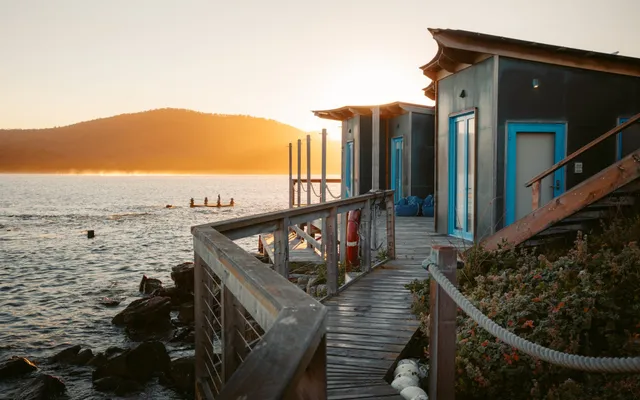
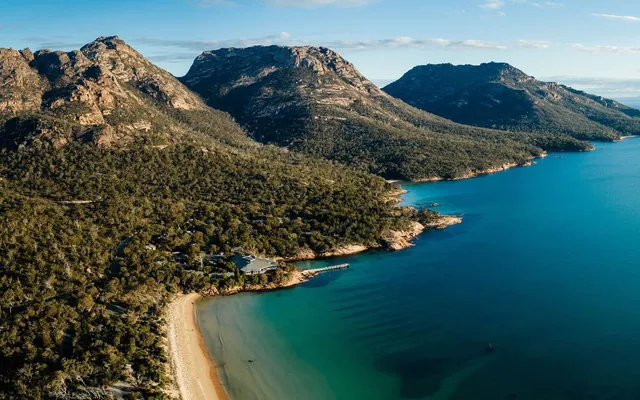
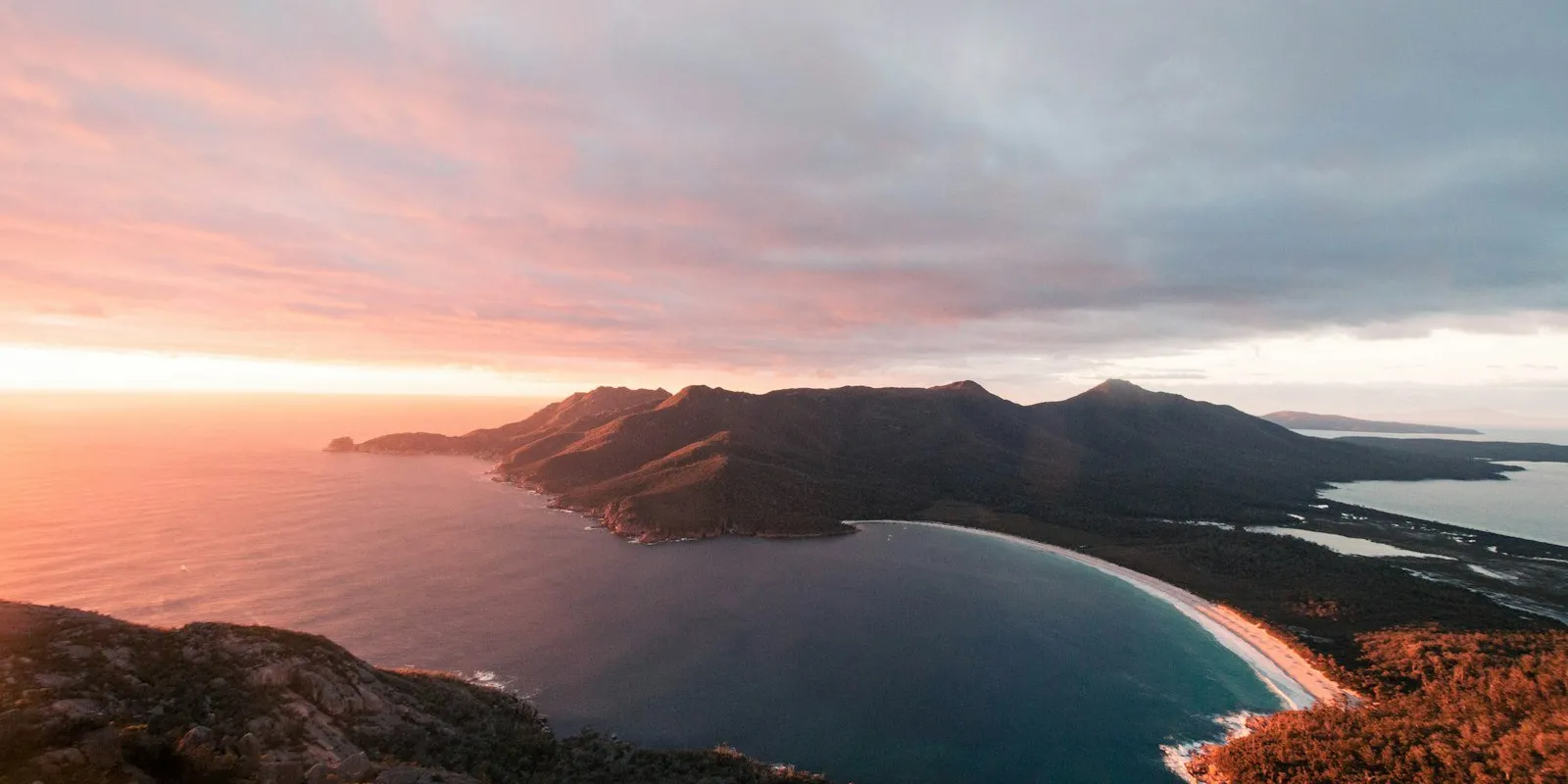
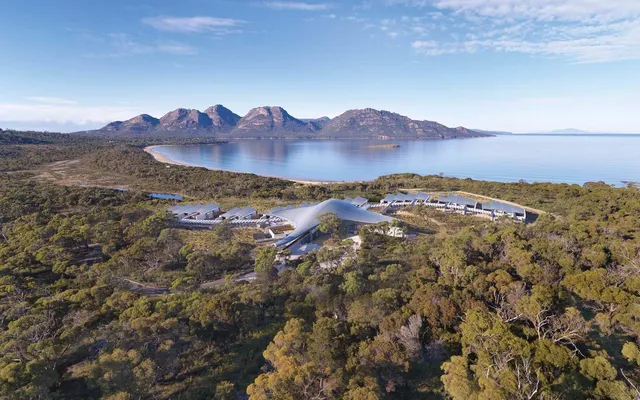
Tasmania’s East Coast is defined by a collision of colour that feels almost improbable: the burnt-pink granite of The Hazards rising sharply above bays of water so clear they shift between turquoise and sapphire depending on the light. Wineglass Bay, regularly cited among the world’s most beautiful beaches, is only the headline act. The broader Freycinet Peninsula is a one-hundred-and-seventy-square-kilometre tapestry of empty white-sand coves, dry eucalypt forest, and coastal heathland where sea eagles ride thermals above the Tasman Sea.
The food story here is inseparable from the geography. Great Oyster Bay produces some of Australia’s finest Pacific oysters, shucked to order at the waterside marine farm. Rock lobster, abalone, and blue mussels come from the same cold, clean waters. Inland, the mild East Coast microclimate, Tasmania’s sunniest and driest region, supports cool-climate vineyards around Cranbrook and Swansea, with pinot noir and riesling performing particularly well.
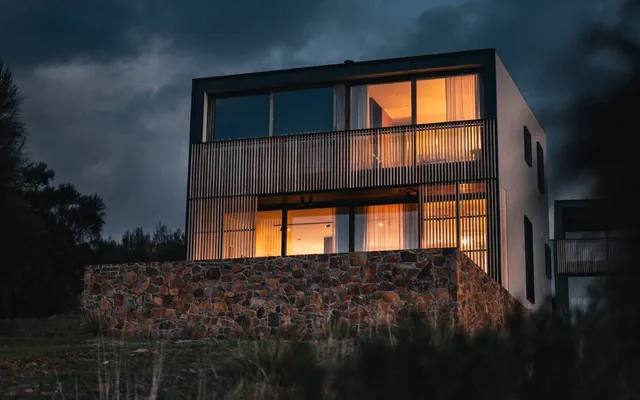
For luxury travellers, the appeal is the sense of genuine remoteness without deprivation. This is a coast where you can walk for an hour on a perfect beach and encounter no one, kayak alongside dolphins in sheltered bays, or take a guided walk through the Aboriginal middens at Coles Bay that speak to forty thousand years of continuous occupation, then return to a suite with floor-to-ceiling views of the very landscape you just explored.
 3
3