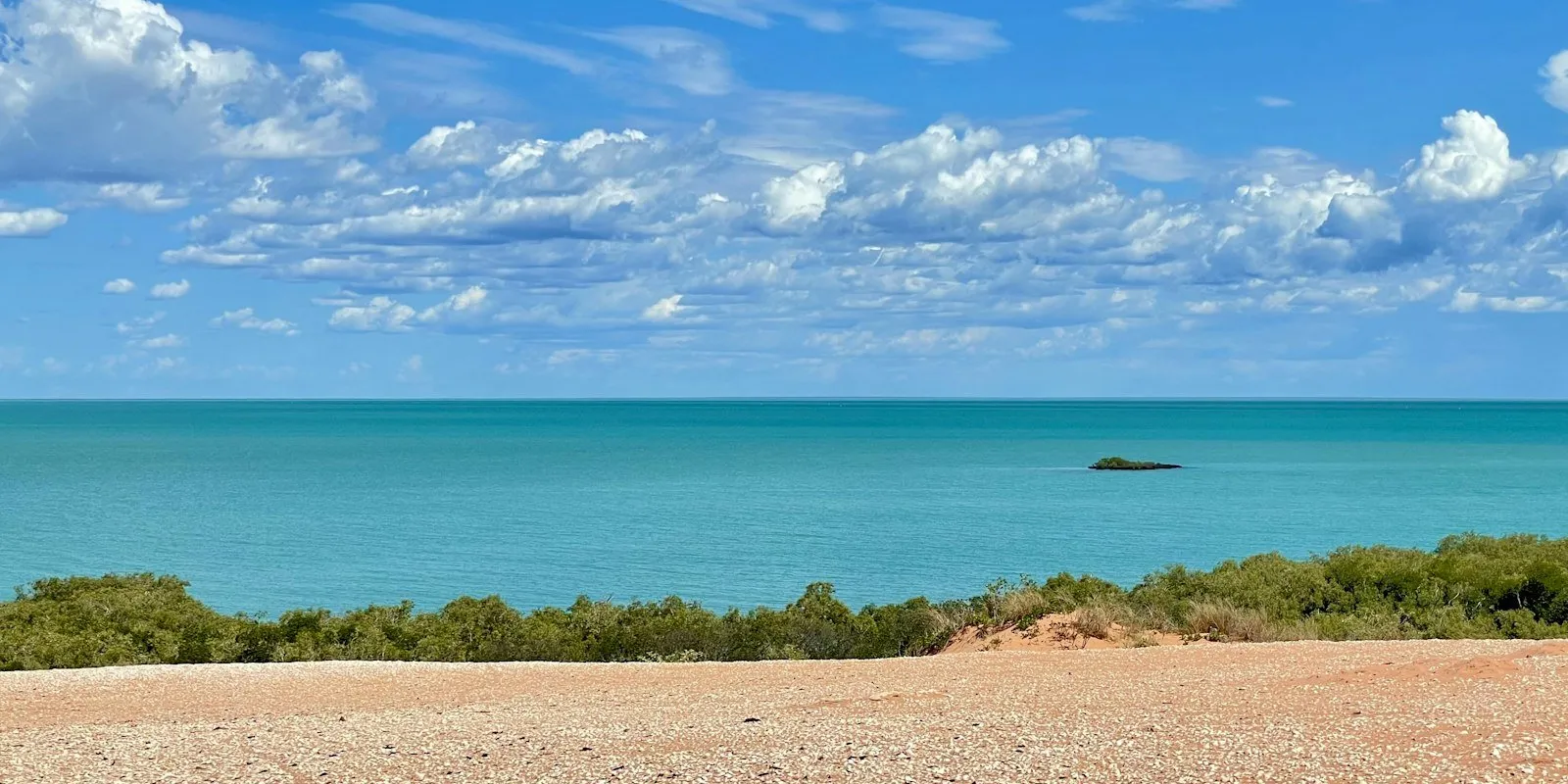
Broome exists at the intersection of outback and ocean, a place where red pindan cliffs drop into the turquoise waters of the Indian Ocean and the sky stages sunsets that stop conversations mid-sentence. The town’s 22-kilometre Cable Beach is the centrepiece, a sweep of white sand so vast that camel trains traversing it at dusk appear as tiny silhouettes. At low tide on Gantheaume Point, 130-million-year-old dinosaur footprints emerge from the reef rock, a reminder of the deep time embedded in this landscape.
The town’s identity was forged by the pearling industry. From the 1880s, divers from Japan, Malaysia, China, and the Philippines converged on Roebuck Bay to harvest the giant Pinctada maxima oyster, creating one of Australia’s most genuinely multicultural communities. That heritage survives in Chinatown’s corrugated-iron architecture, the Japanese Cemetery, and a culinary scene that draws on Asian, Indigenous, and European traditions. Today, Broome’s pearl farms still operate, and visiting one remains among the more memorable experiences available in regional Australia.
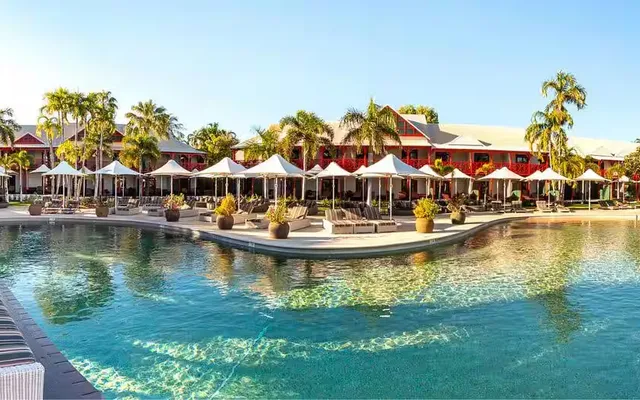
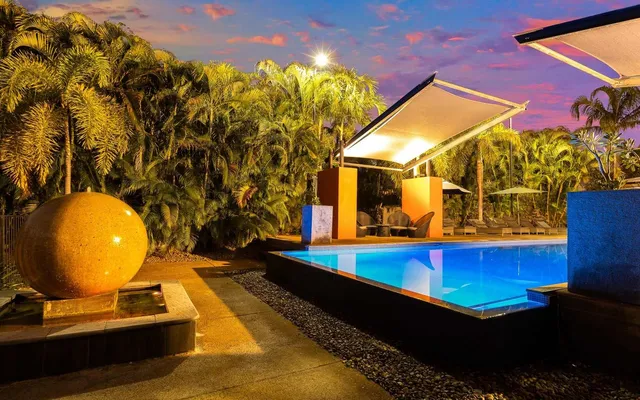
What draws luxury travellers here is the combination of remoteness and refinement. Broome feels genuinely distant from the eastern seaboard (the nearest capital city is a three-and-a-half-hour flight away), yet its resorts, restaurants, and cultural offerings are sophisticated and well established. The Staircase to the Moon, a natural optical illusion created by moonlight reflecting off the exposed mudflats of Roebuck Bay, draws crowds to the foreshore several nights each month between March and October. It is the kind of spectacle that cannot be manufactured, and it captures what makes Broome compelling: nature operating at a scale and pace that humbles the visitor.