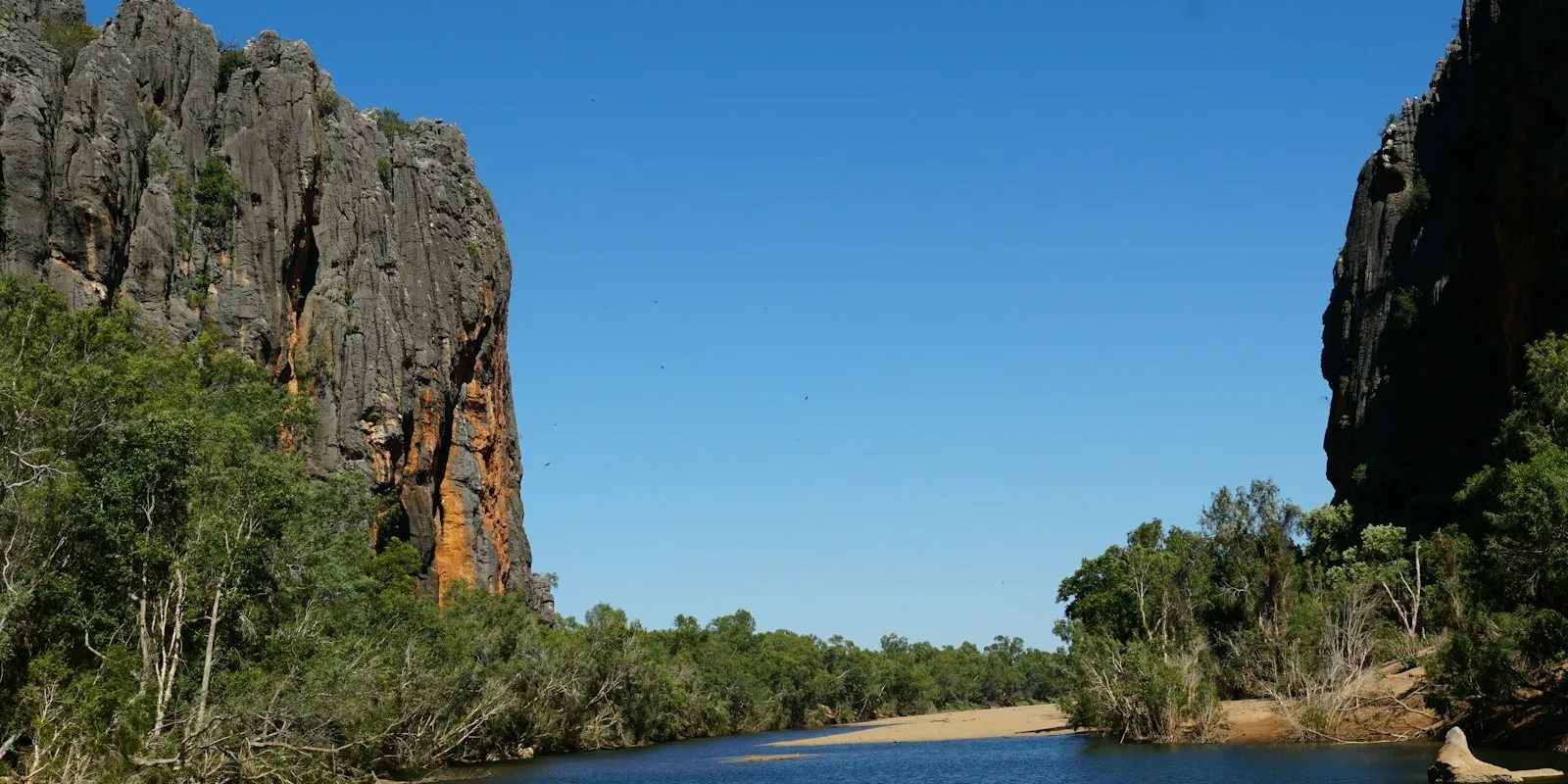
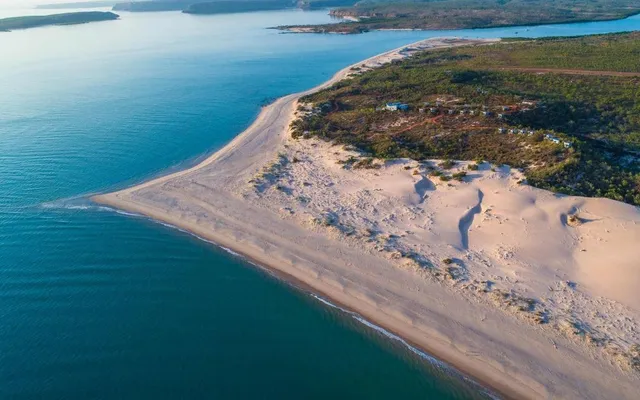
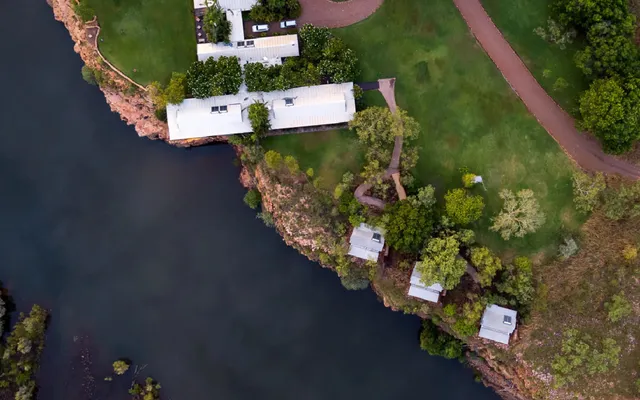
The Kimberley is one of the last great wilderness regions on Earth. Covering roughly 420,000 square kilometres of north-western Australia, an area three times the size of England, it supports a permanent population of fewer than 40,000 people. The landscape is staggering in its variety: the beehive-striped sandstone domes of the Bungle Bungle Range in Purnululu National Park, the tidal phenomenon of the Horizontal Falls where ocean water forces through narrow coastal gorges, and river systems lined with towering red escarpments that have barely changed in geological time.
This is the traditional country of numerous Aboriginal language groups whose continuous connection to the land stretches back at least 40,000 years. Rock art galleries scattered across the region, some accessible only by helicopter, rank among the oldest and most significant on the planet. That cultural depth is woven into the experience of visiting the Kimberley, whether through guided walks with Indigenous rangers or simply through the awareness that every gorge and waterhole carries layers of story.
Luxury travellers come to the Kimberley for an encounter with genuine remoteness. There are no traffic lights, no mobile phone coverage in most areas, and no pretence of urban convenience. What replaces it is profound: swimming beneath waterfalls in gorges you share with no one, watching saltwater crocodiles patrol tidal rivers from the safety of a boat, and eating freshly caught barramundi under a sky dense with stars. The dry season, from May to October, is the only practical window for visiting, and the best lodges book out months in advance. This is not a destination of impulse; it rewards those who plan ahead and commit to the journey.