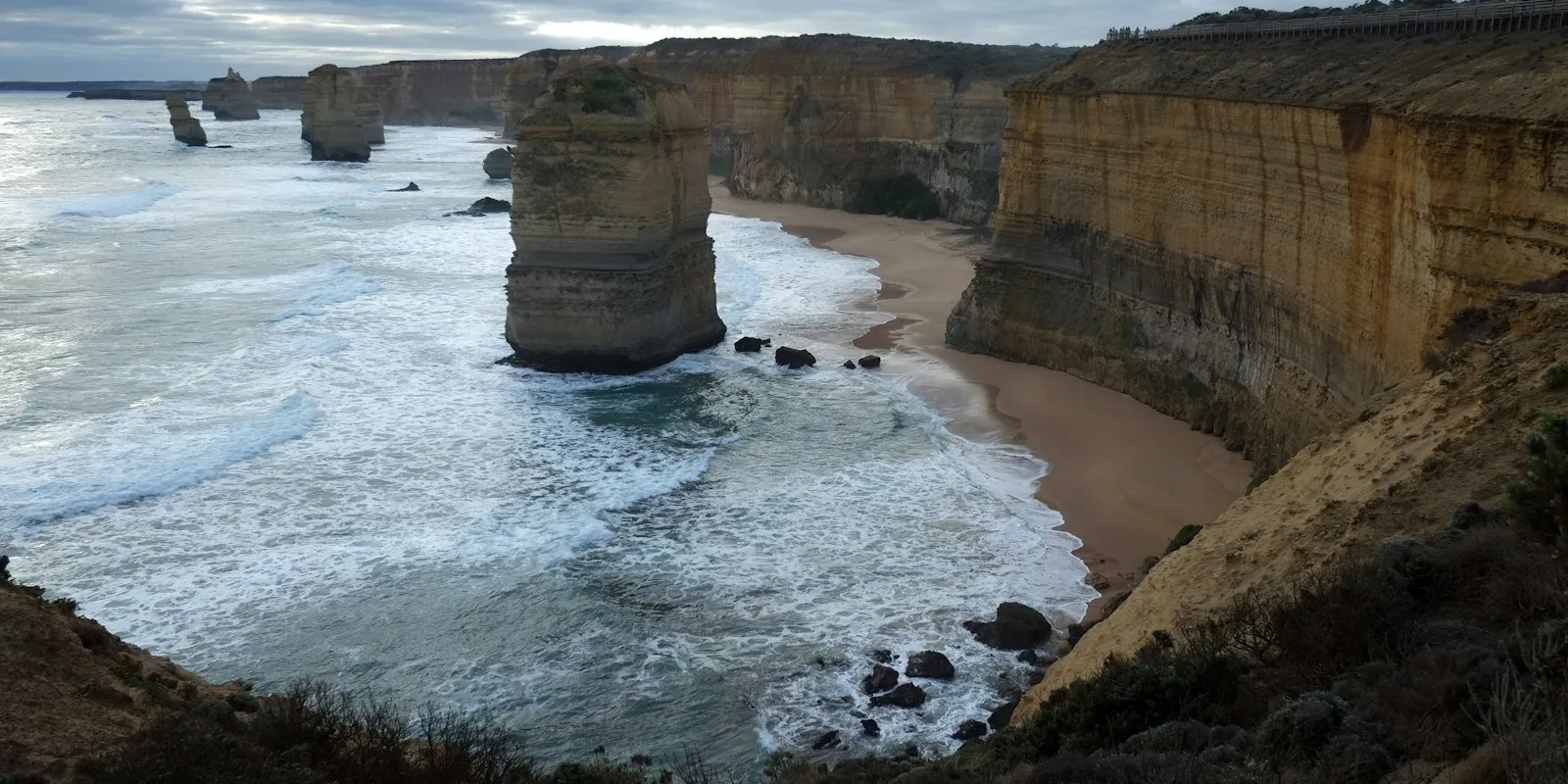
The Great Ocean Road was built by returned soldiers between 1919 and 1932 as a memorial to their fallen comrades, the world’s largest war memorial, carved into some of the most dramatic coastline on the continent. The engineering ambition shows in every switchback: sheer limestone cliffs dropping into the Southern Ocean, the eroded sea stacks of the Twelve Apostles glowing amber at sunset, and the ancient Otway rainforest pressing right down to the shoreline with towering mountain ash and moss-draped myrtle beech.
The landscape shifts markedly as you travel west. The eastern surf coast around Torquay and Bells Beach is broad, sunny and popular; this is where Australian surf culture began. Past Lorne, the road tightens into the Otway Ranges, where rainfall doubles and the forest canopy closes overhead. By the time you reach the Shipwreck Coast between Princetown and Port Campbell, the mood is altogether wilder: vast skies, few people, and some of the most photographed rock formations in the Southern Hemisphere.
For luxury travellers, the appeal lies in the contrast between raw natural power and the small-scale, considered hospitality that has emerged along the route. The region’s food story centres on ocean-fresh seafood, particularly Apollo Bay crayfish, and cool-climate producers in the Otway hinterland. This is not a manicured resort coastline; it is a place where the landscape demands attention, and the best stays are designed to frame it rather than compete with it.